

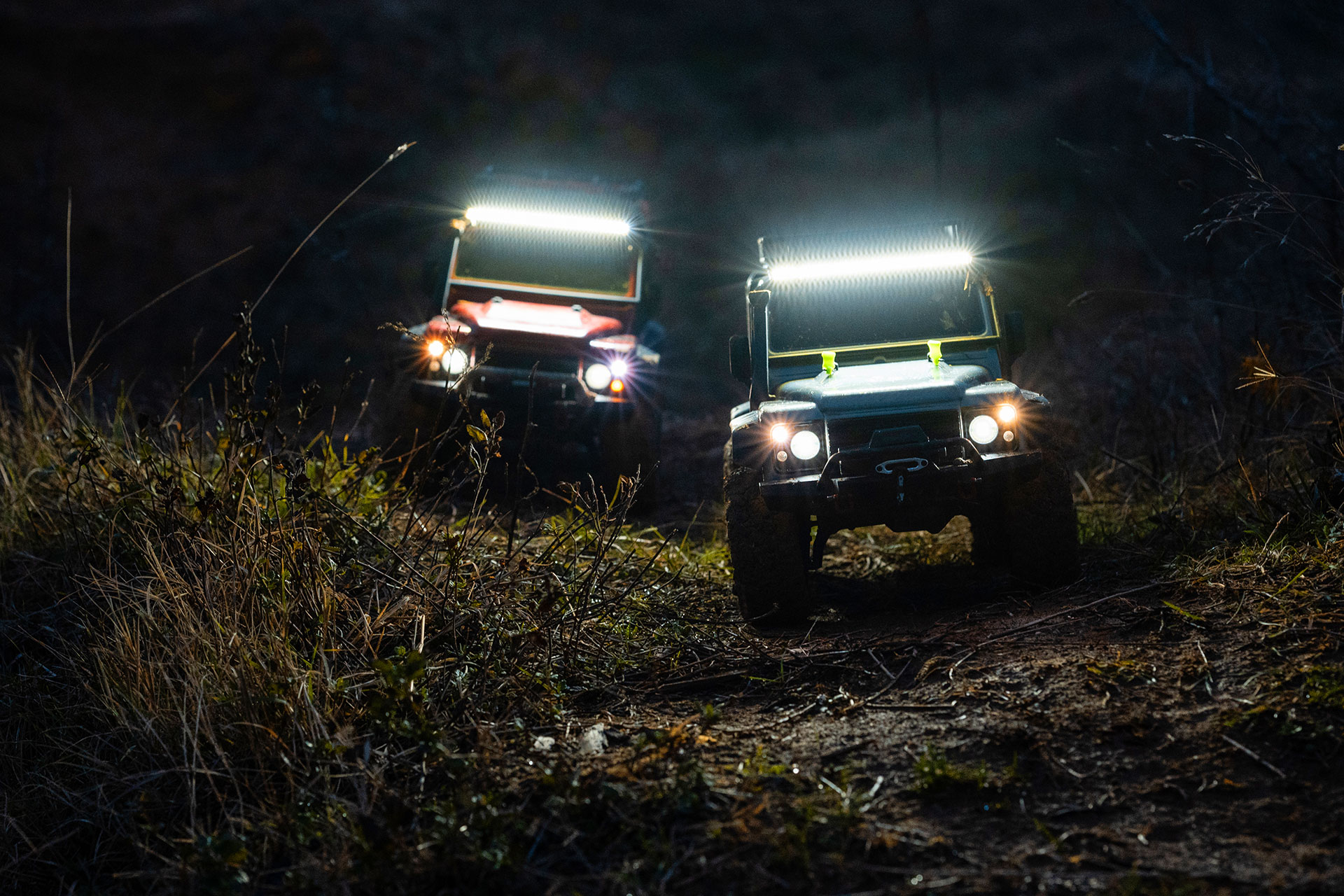
Stock headlights were designed for paved roads, predictable conditions, and reasonable speeds. Take your truck or Jeep off that pavement after dark, and those factory lights reveal their limits almost immediately. The beam pattern is wrong. The range is insufficient. And the terrain that looks manageable in daylight becomes genuinely unpredictable at night.
Off-road lighting doesn’t just add brightness. It changes the entire experience.
Stock Lights Are Built for the Highway, Not the Trail
Factory headlights optimize for oncoming traffic compliance, pedestrian safety, and regulatory requirements. None of those priorities translates well to a rocky trail, a muddy two-track, or a dark rural backroad.
The beam pattern cuts off too early. Side illumination is minimal. And the color temperature of most stock bulbs renders terrain contrast poorly, making it harder to read the ground ahead accurately.
Off-road lights solve for a completely different set of conditions.
What Better Lighting Actually Does
The difference between adequate and proper off-road lighting shows up in a few specific ways:
- Spot beams extend your forward vision dramatically, giving you time to react to obstacles well ahead
- Flood beams widen the illuminated area around the vehicle, revealing what’s immediately to the sides and underfoot
- Light bars combine both patterns to cover the full field around the vehicle simultaneously
- Improved color temperature renders terrain texture more accurately, making it easier to judge depth and surface condition
Together, these aren’t incremental improvements. They fundamentally change how much information you have while driving in the dark.
Placement Determines Performance
A powerful light in the wrong position delivers a fraction of its potential. Roof-mounted bars cast light over a wide forward arc but can create glare on dusty or foggy trails. Bumper-mounted pods illuminate the immediate terrain directly ahead with less scatter.
A-pillar lights cover the angles that neither position fully handles.
Professional installation ensures that each light type goes where it actually contributes, aimed correctly and wired cleanly without voltage drop that robs output.
The Wiring Matters More Than Most People Realize
Off-road lights draw significant current. Running that load through undersized wire, poorly crimped connections, or a cheap relay introduces resistance that dims output and creates heat that degrades components over time.
A properly wired system uses adequate gauge wire, quality relays or switches, and a clean fused connection at the battery. It runs full voltage to every light, every time, regardless of what else is drawing power from the vehicle simultaneously.
Night Driving Transformed
Good off-road lighting doesn’t just illuminate more. It makes driving after dark feel controlled rather than precarious. The terrain reads clearly. Obstacles register early. And the trail that felt borderline at night starts to feel like the daylight version of itself. That confidence is what serious off-road drivers are actually buying.